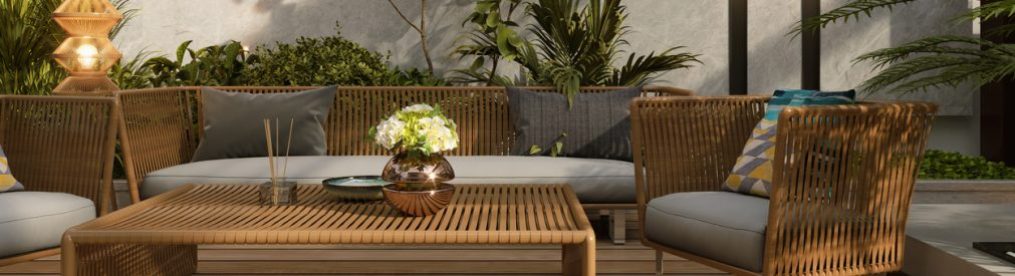
The benefits of owning a garden awning

If you are looking for a worthwhile addition to your garden, consider installing a garden awning. At present, many homeowners are crazy because of this kind of external coverage not only because of its remarkable aesthetic qualities but also for the practical benefits it offers.

Implementing an efficient and reliable outdoor awning will certainly provide you with many advantages. First, they can provide a great deal of privacy and comfort in your home. You can roam freely in your garden without worrying about exposure to the sun. You can also hide certain parts of your home that you do not want to be seen by your neighbours. With retractable awnings you’re able to choose as much privacy as you’d like, so you can extend the awning, which is also incredibly useful on a rainy or sunny day, whilst you may decide you want the sun shining down on the patio for an hour or so, so you can retract the awning and bring the fabric back in to allow for more light.

The most important contribution that this kind of outdoor cover grants is the blessing of having a comfortable shaded area in your garden or patio. A reliable outside cover in your garden or garden will allow you to spend some time outdoors even when the sun is still stuck. In fact, you can enjoy a perfect tea party outside the boundaries of your home regardless of the weather. Moreover, the high-quality awnings are proven to reduce the temperature. Therefore, you can feel comfortable knowing that your children can be safe outdoors.

Apart from providing weather protection, the garden awnings can be used as a beautiful garden theme. As with porch awning, which comes in many attractive designs. So, if you want to improve the look of your garden, all you have to do is choose a canopy with a striking pattern. But make sure they will fully complement the overall look of your garden.

In addition, here are some of the fun activities you can enjoy when you have one at home:

  • A quiet afternoon reading a good book, surrounded by pure air and natural light that will not hurt your eyes.
  • An afternoon picnic and barbecue dinner with family and friends.
  • Children playing games in the backyard without having to worry about getting sunburns.

These benefits must be enough to convince you to get one for yourself. Now if you’re planning to buy, first decide whether you want the manual or the automatic type. Manual types are a bit tedious to set up though you will eventually get used to them over time. However, the automatic type contains remote controls that make them easy to use and quick to use. You can even open it from inside the house with the click of a button on the remote control.

Now that you have realised the benefits of these awnings, take some time to check out the different types of outdoor awnings to help you choose the most viable options.

Should You Do Gardening in the Winter?

Should you do gardening in the winter? Yes, but gardening during the winter can seem like a challenge. Days are usually characterised as sad, plain, and bleak; but plant life below the soil is very vibrant. Before spring flowers and shrubs unleash their beauty, it is during the winter season when it truly starts to come to life.

Gardeners have a lot to do during the winter. This the perfect opportunities to start planting spring seeds, to raise and dig new flower beds and to prepare the soil for the spring and summer days ahead.

When gardening during this season, an individual should find out what are the best plants to cultivate? What kinds of plants best adhere to the zero-degree temperature and other general conditions of winter?

Gardening during this season is as exciting and fruitful as gardening in any season of the year. It is a matter of choosing the right flowers and shrubs to cultivate that will grow best during the winter days. Gardening during the winter also means cleaning up, making repairs and covering up as much as you can to prevent plants from being affected by snow and frost.

What are the disadvantages of a conservatory?

Conservatories exude luxury, light and space. Notable conservatories include the Barbarican conservatory and the Syon House. Having one seems to be a perfect addition to a home – a place to enjoy afternoon tea and biscuits, observing the outside while comfortably settling in. However, with all its advantages, a conservatory has its fair share of disadvantages as well.

One of its disadvantages is the fact that most conservatories are made of glass. Thus, keeping it at the right temperature can be a real struggle. It

can be way too hot and humid in the summer and way too cold in the winter. If the main point of having a conservatory was to enjoy additional space to frolic and relax at, then it is moot when the temperature will be at either ends of the spectrum. That said, there are many companies now offering, conservatory roof insulation and this is the process of replacing your glass roof with a ceiling, so you may lose the supreme sky view above, but you can be snug and warm in the winter.

It is possible to install special types of windows in the conservatory to regulate its temperature. With materials like sandwich boards and outer layers of anodised

aluminum, it can be easily done. However, it can be quite expensive. This brings us to another disadvantage of owning a conservatory – its cost. Building it in the first place may cost anywhere between £6,000 to £20,000, depending on its size, design and the type of materials used. Glass tends to be more expensive that polycarbonate and orangery conservatories tend to cost more than Victorian ones. Quite a lot to consider for a structure that may or may not be fully utilised.

Another disadvantage it holds is connected to one of its primary materials – glass. If one lives in a closely-knit neighbourhood, a conservatory made of glass will provide little to no privacy from nosey neighbours and passers-by. Anyone may peer over and see what one will be having for dinner. While it may seem like a shallow disadvantage to point out, nobody should be felt like they are being watched in their own homes don’t you think?

Again, while conservatories have their charm and advantages, it is still best to weigh it with its disadvantages. One must be prepared for its cost and its upkeep, to name a few. In the end, a well-researched decision is the best weapon to any crossroad, so be sure to do your homework first. If you’d like to know of another alternative, why not invest in a summerhouse? These are considerably cheaper and are often situated toward the rear of the garden, so you get a space that’s cute, cosy and away from the hustle and bustle in the house! It’s a nice option if you’re looking for a quiet area to unwind with a book and a cup of coffee.

Things To Consider When Looking For The Perfect Wooden Bench

If you are looking to have an all-natural outdoor style, then you may have to go with wood. For best-quality wood used in outdoor or park benches look for the ones made with center-cut heartwood lumber that has consistent grain. It should be screwed using zinc plated or stainless-steel screws. Screws used in timber outdoor benches make tightening easy if the bench ever becomes loose because of age.

The best types of wood for an outdoor bench include:

  • Natural cedar or pine: these age to a silvery gray unless sealed or painted. If treated well, they will last for years outdoors. Cedar is expensive compared to pine.
  • Teak – this is a tropical tree that makes the perfect choice of material for outdoor furniture. Even when exposed to the elements, teak will last for at least 50 years. This is why teak is very pricey. You may want to apply oil annually or biannually just to maintain that natural reddish-brown color.
  • Australian Jarrah – just like teak, it is very durable and will last for decades. It has delicious and deep reddish tones that add warmth and style to the outdoor spaces.
  • Natural wood – this comes from roughly cut tree branches, and it doesn’t withstand the elements.

Low maintenance doesn’t always mean boring on the eye

If we were to use the phrase “low maintenance garden” what are the first things that come to mind? For us, we think about a lot of concrete, too much patio or decking with potted plants. That’s one way of looking at it, but low maintenance doesn’t always have to mean boring. If you want a really attractive garden that’s very easy to maintain, you could choose to incorporate some or all of the following:

  • Decking
  • Astroturf
  • Hanging baskets
  • Intricate fencing
  • Fairy lights
  • Railway sleepers
  • Oak tables and chairs

Solid wood is very easy to maintain and you only need to oil or wax the wood every year to ensure it’s sealed against the elements, whilst simple plants in hanging baskets and pots can add deep colours to your garden. You can then take the look further with a pretty shed, a pathway with pleasant fairy lighting or a patch of real turf or artificial grass so you have some greenery.