Using Reclaimed Railway Sleepers to Build Garden Structures

When you’re thinking about building something in your garden, the most important feature of the building materials needs to be durability. The materials are going to be exposed to a variety of environmental factors, such as damp, decomposition, heat and more. When you consider these factors, railway sleepers are able to stand up to the challenges these present fairly well.

When you compare railway sleepers to a number of alternatives, there are plenty of areas where they are able to win out in terms of value. Because railway sleepers are generally reclaimed wood, the cost of the wood is relatively cheap in comparison to other wood products. They also are quite thick, which means that their longevity will also be significant.

For those who are interested in preserving our environment (hopefully everybody), using reclaimed anything has the clear advantage of recycling used products. Even if they are perhaps a bit too worn out for their initial purpose, using them in a garden, where wear and tear is expected, is still acceptable.

Railway sleepers tend to conform to a standard shape and size, which 8ft 6″ long, 10″ in width, and 5″ in thickness. This size and shape ensures a high level of durability in the face of natural elements, and a level of stability that is important for garden structures.

There are a number of uses for railway sleepers in our gardens. Just about every common structure in gardens can incorporate these materials on their design, such as flower bed bordering, garden pathways, furniture, patios, verandas and decking.

Sleepers are regularly used for all of the above purposes, but they are arguably best suited for flower beds. As they are strong and thick, they are quite capable of being used to create raised flower beds or beds set into the ground.

Rust Free Garden Furniture – aluminium

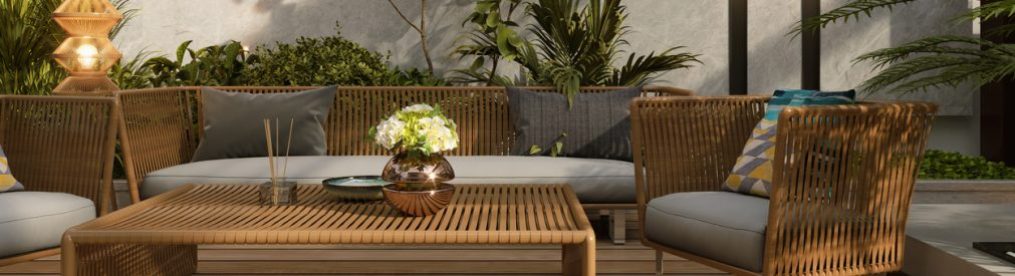
Finding the right type, style and colour of garden furniture is a challenge which is already tough enough. However, finding garden furniture which is rust free from the UK harsh winters / summers can really be even more tough, especially when the current design and modern take on garden furniture always seems to be wood based products.

As we know, wood, over time, no matter how many times you treat it, wax it or coat it with special oils and paints, will fade over time and become more fragile. Being a naturally occuring material, this is to be expected.

Whilst a man made object such as casted aluminium garden furniture will typically see it’s life span go past a 10 years (at the very minimum) because this type of material isn’t as affected to the strong seasonality trends in weather the UK see’s each year and can hold up to the coldest winters.

A Gazebo for your Garden

Gazebos are interesting pieces of garden furniture, offering a lot of what a conservatory and a canopy offer, but with far greater mobility. By this I mean that you can place it wherever you want within your garden. It can greatly improve your garden experience and usability. For most homes, gardens are rarely used, either due to lack of interest, or due to poor weather. A gazebo provides you with an inclusive space in your garden, protecting you from the weather, weather that be rain or excessive sunlight, while still being able to enjoy the outside and fresh air. In addition to these benefits, a gazebo makes for a wonderful outside play area for young children. It is ideal for minimising the potential harm caused by UV light exposure, so turning it into a playhouse for your children during hot sunny weather during the summer could be an ideal solution.

Creating a Garden Deck or Patio

Creating and constructing a garden deck can be a tricky job for an individual. While I would advise that you first look through your options regarding hiring a professional, if you are interested in doing it yourself, there are a few things which you need to make sure of first.

With any construction, making sure that the foundations are good is the most important thing. To do this, you need to make sure that they are stable, which you can shore up by using a stone/gravel base and sandbags above that.

From there, deciding upon the design of the deck becomes the most important. Making sure that the materials used makes design-sense in regards to both your home and your garden is something which you will appreciate when using it for years to come. Wood, which is, in my opinion, the best material to use for a deck/patio, but can mean problems in the long run, as decay and rot can be an issue.  This can be avoided, by properly treating the wood, and regularly treating it in following years.

A stone patio may be a great alternative to a wood garden deck, depending upon the design of the rest of your garden and home. Unlike a deck, a patio doesn’t require so much preparation, as you can just use irregular stones to fit the parameters of the area.

Welcome to the Gardener’s Boutique

Welcome to the Gardener’s boutique, where we provide useful information about gardening, gardening furniture, and gardening design. There are a lot of things which you can do to improve your garden, and mould it into a great thing, that is a real asset to your home, and your lives.